
Home / All / Silicon Carbide Abrasive Filament / How does silicon carbide filament perform for metal deburring?
How does silicon carbide filament perform for metal deburring?
It deburrs non-ferrous parts fast and cleanly, and handles steel well too.
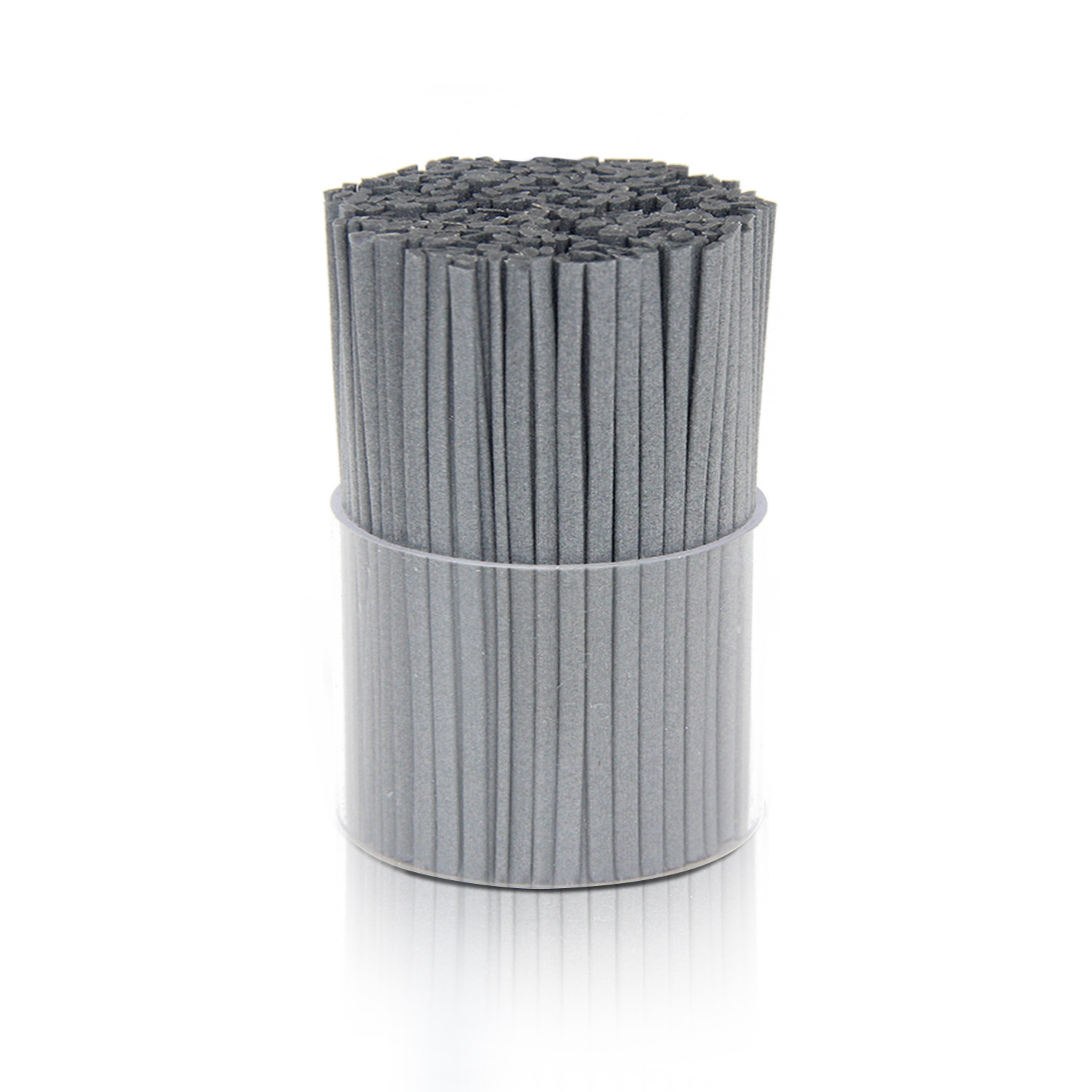
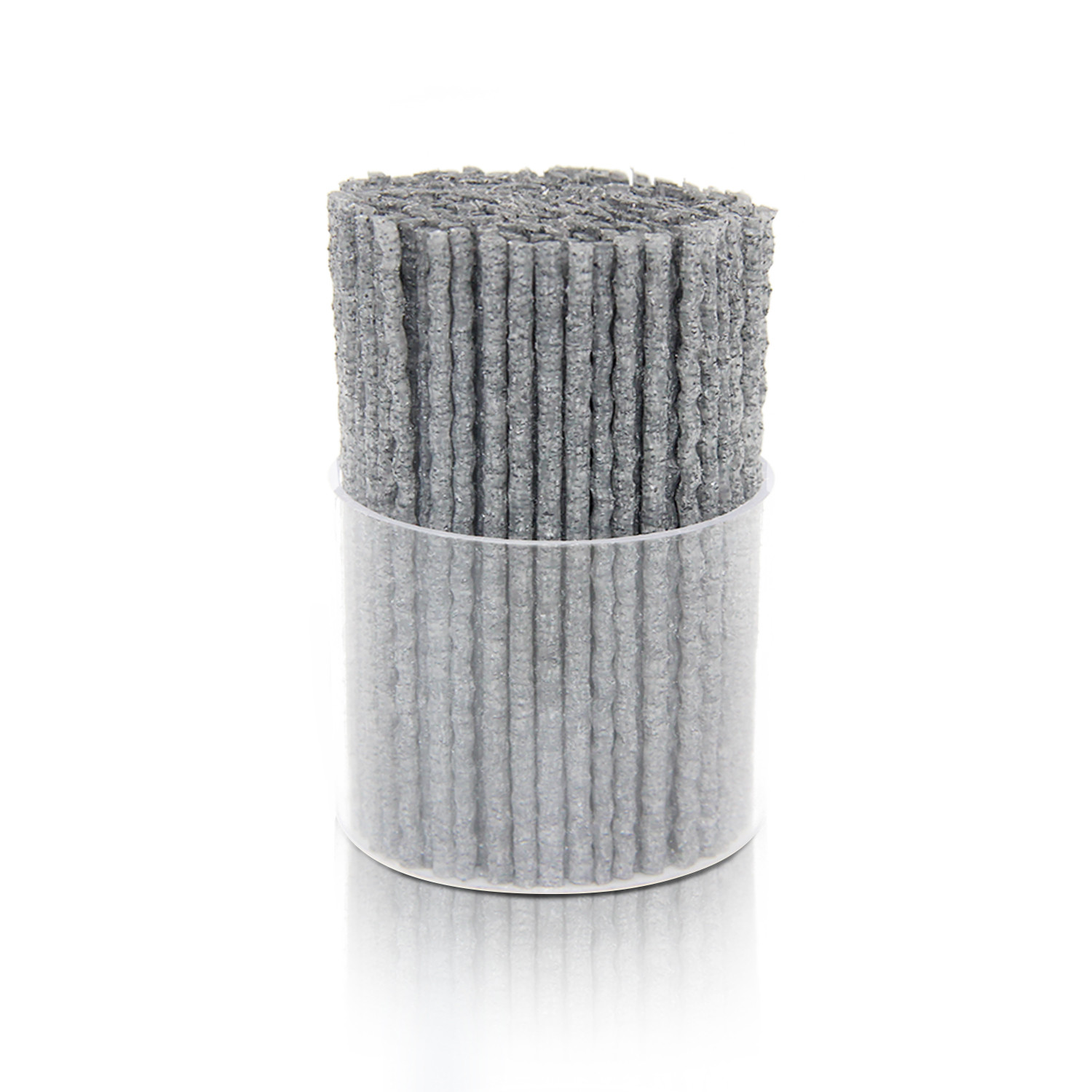
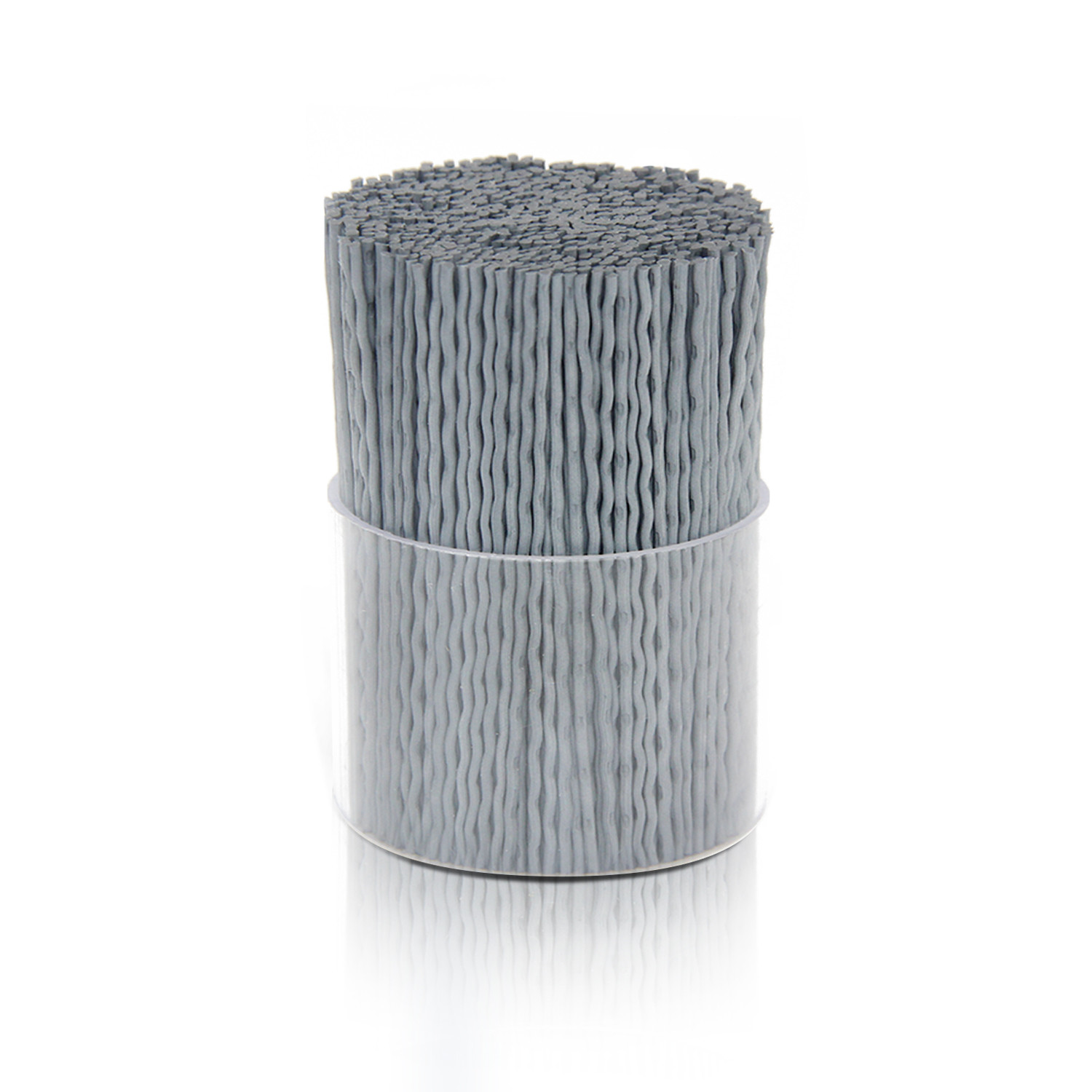
Burrs on aluminium, brass, copper and zinc tend to be gummy, and coated abrasives often load up. The sharp, hard grains in silicon carbide filament shear burrs off instead of smearing them, and open filament spacing keeps the brush self-cleaning.
Setting up a deburring brush
- 1. Grit: 60# to 120# covers most edge deburring; 180# to 240# for edge radiusing before finishing.
- 2. Diameter: 0.6 to 1.2 mm is the usual range for disc and cup deburring brushes.
- 3. Contact: Keep light, consistent pressure - let the grains cut, do not force the brush to grind.
- 4. Brush type: Disc brushes for flat parts, cup brushes for edges and corners, end brushes for holes and slots.
Steel and stainless parts
Silicon carbide deburrs steel effectively. For long production runs where edge finish consistency is critical, aluminum oxide or ceramic filament can hold a slightly more stable edge - test both if your tolerance window is tight.
Compare long-run finishing options in the Aluminum Oxide & Ceramic Abrasive Filament FAQ.


Are you looking for a reliable stone processing tool manufacturers?
We can quickly provide customers with market analysis, technical support and customized services.Please send your message to us
Contact SleekEven today to discuss your brush manufacturing needs.
Contact us now to get 1). Samples 2). Abrasive filament solutions.
Contact us now to get 1). Samples 2). Abrasive filament solutions.
- Name
- Phone
- *Title
- *Content