
Home / All / Silicon Carbide Abrasive Filament / Silicon carbide vs aluminum oxide filament: which one should I choose?
Silicon carbide vs aluminum oxide filament: which one should I choose?
Silicon carbide cuts faster and harder; aluminum oxide wears longer and more evenly on ductile metals.
Both are PA612-based abrasive filaments, but the grains behave differently. Silicon carbide grains are sharper and harder, so they cut fast and fracture to refresh their edges. Aluminum oxide grains are tougher, so they resist fracturing and keep a stable cutting profile for a long time.
| Criterion | Silicon carbide | Aluminum oxide |
|---|---|---|
| Cutting speed | Faster, especially on hard, brittle surfaces | Moderate but very stable |
| Best materials | Stone, ceramics, glass, aluminium, brass, copper | Steel, stainless, tough alloys, wood |
| Wear behaviour | Sharp grains fracture and renew, fast cut throughout life | Tough grains wear evenly, consistent finish |
| Edge quality on ductile metals | Good, may need finer grit to avoid scratching | Excellent, smooth uniform brushing |
| Typical role in the line | First passes: prep, descale, deburr | Later passes: finishing, radiusing, cleaning |
Practical rule of thumb
If your bottleneck is how fast material comes off, start with silicon carbide. If your bottleneck is finish consistency across a long run, start with aluminum oxide. Many customers run SiC for preparation and aluminum oxide for final brushing on the same line.
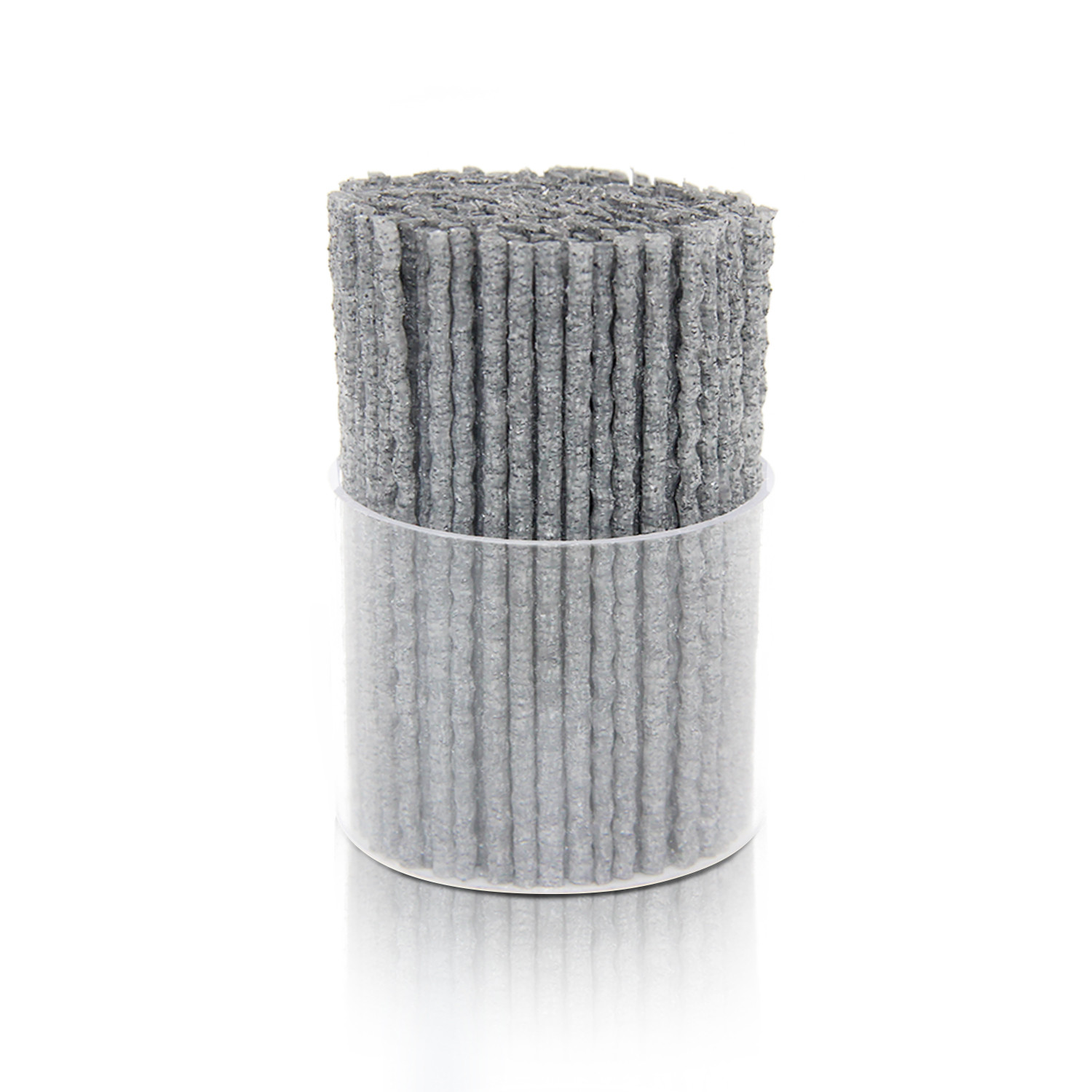
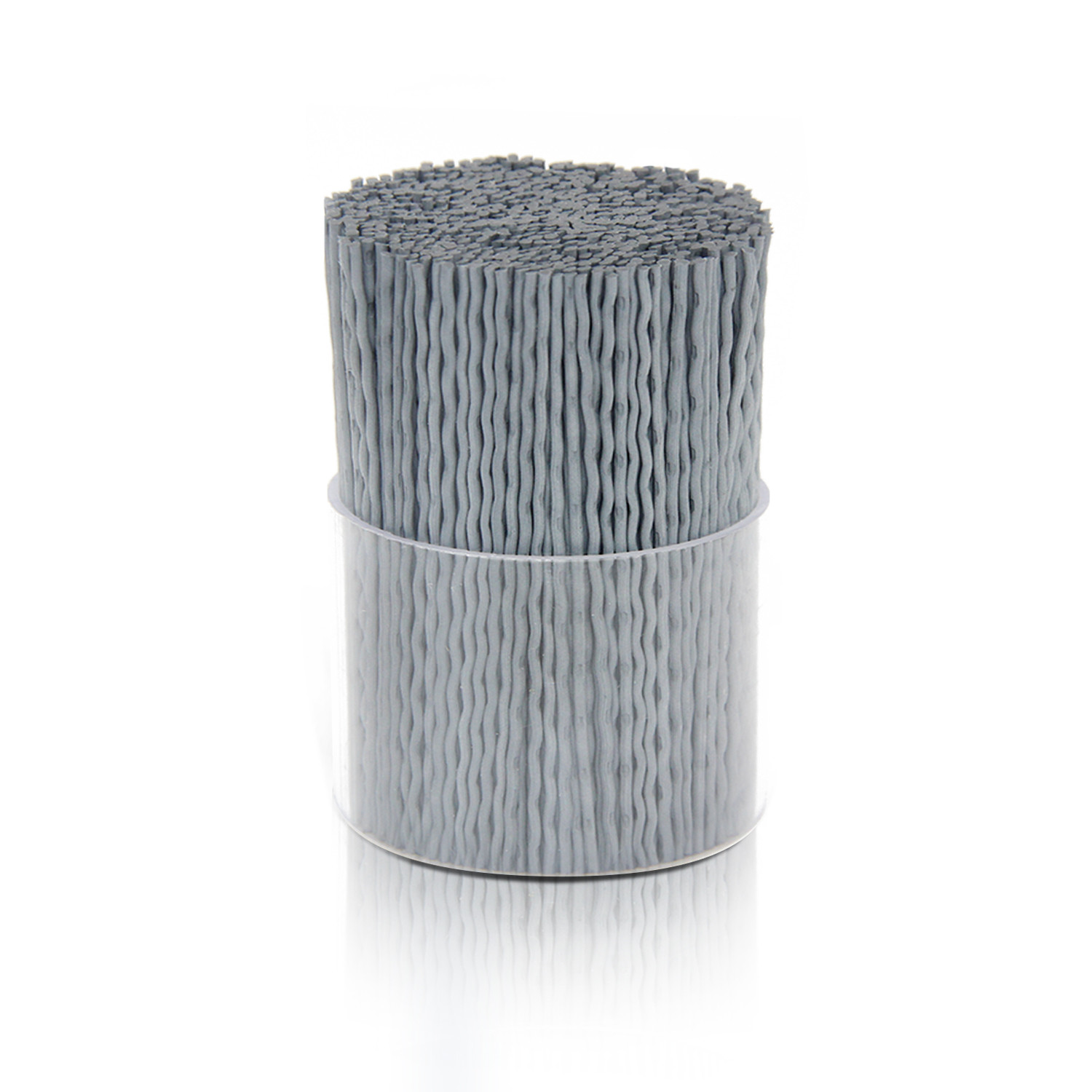

Full details on the aluminum oxide option are in our Aluminum Oxide & Ceramic Abrasive Filament FAQ.


Are you looking for a reliable stone processing tool manufacturers?
We can quickly provide customers with market analysis, technical support and customized services.Please send your message to us
Contact SleekEven today to discuss your brush manufacturing needs.
Contact us now to get 1). Samples 2). Abrasive filament solutions.
Contact us now to get 1). Samples 2). Abrasive filament solutions.
- Name
- Phone
- *Title
- *Content