
What is Abrasive Filament? Understanding Its Diverse Applications
Have you ever wondered how complex metal parts get those perfectly smooth, burr-free edges or how wood surfaces are prepared for a flawless finish? The secret often lies in a remarkable and versatile tool: abrasive filament. This innovative material is a game-changer in countless finishing processes.
I'm excited to dive into the world of abrasive filament, exploring what it is, how it works, and why it has become an indispensable component in everything from heavy industrial manufacturing to detailed craftwork. By understanding its capabilities, you can unlock a new level of quality and efficiency in your own projects.
Key Takeaways
Abrasive filament is a composite material that combines the flexibility of polymer strands, typically nylon, with the cutting power of embedded abrasive grains. This unique structure allows it to conform to irregular shapes and provide a consistent, self-sharpening finishing action. Key applications include industrial deburring, surface conditioning, edge radiusing, and polishing across metalworking, woodworking, automotive, and electronics industries. The choice of filament depends on the material (nylon, silicon carbide, aluminum oxide, etc.) and grit size, which determine the aggressiveness and final finish.
Unpacking What Abrasive Filament Is All About
To truly appreciate the power of abrasive filament, we first need to understand its fundamental composition and how it's made. It's a marvel of material science, engineered to balance flexibility with cutting power.
The Basic Definition of Abrasive Filament
At its core, abrasive filament is a synthetic polymer bristle, most commonly made of nylon, that has been "impregnated" with abrasive mineral particles. Think of it as a flexible brush hair that has its own built-in sandpaper. This unique composite structure combines the elasticity and fatigue resistance of a polymer with the grinding and polishing capabilities of hard minerals. Unlike tools like sandpaper or grinding wheels where the abrasive is only on the surface, the grit in these filaments is distributed throughout the entire bristle, from base to tip. This design allows them to tackle a variety of tasks from aggressive deburring and honing to gentle cleaning and polishing.
What are these tiny 'grits' I'm hearing about within the abrasive filament?
The "grits" are the microscopic workhorses of the filament. They are tiny, hard particles of abrasive minerals that are evenly mixed and co-extruded with the nylon or other polymer base during manufacturing. These particles are responsible for the actual cutting, grinding, and polishing action. Common abrasive grains used include Silicon Carbide, Aluminum Oxide, Diamond, and specialized ceramics. The type of grain determines the filament's cutting properties and its suitability for different applications. For instance, the load, or amount of grit, can range between 10% and 30% of the filament's weight, providing a tailored level of abrasiveness.
Common materials used to create the core of abrasive filament.
The core or substrate of the filament provides the essential flexibility, durability, and chemical resistance. Nylon is the most widely used material due to its excellent resilience and ability to return to its original shape, a property known as "bend recovery." Different grades of nylon, such as Nylon 6, 6.10, and 6.12, are chosen based on their stiffness and water absorption properties for various wet or dry applications. While nylon is prevalent, other polymers and even natural fibers can be used for specialized purposes.
How Abrasive Filaments Are Made: A Quick Look
The manufacturing process for abrasive filament is a fascinating blend of polymer chemistry and mechanical engineering, designed to produce a consistent and reliable product.
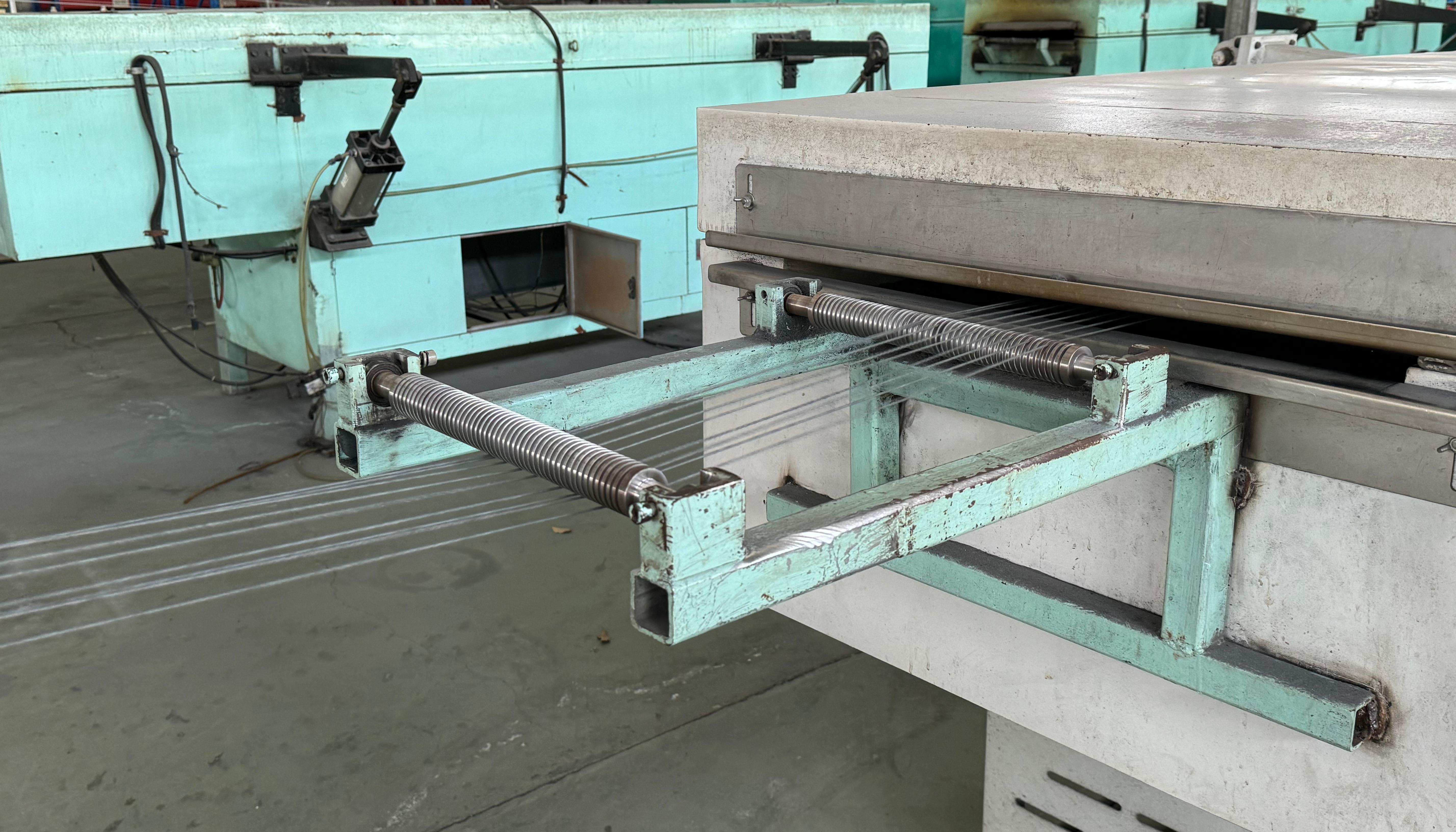
The process of embedding abrasive grains into filament strands.
The creation of abrasive filament begins by mixing a base polymer, like nylon pellets, with a precise percentage of abrasive grain. This mixture is heated and thoroughly blended until it reaches a molten state, ensuring the abrasive particles are uniformly suspended within the polymer. This molten composite is then forced through a die—a process called extrusion—to form the continuous strands of filament. As the strands cool, the polymer solidifies, permanently trapping the abrasive grains throughout the entire cross-section of the filament. This method ensures that as the filament wears down, new, sharp abrasive particles are constantly exposed.
Different shapes and sizes of abrasive filament.
Abrasive filaments are not a one-size-fits-all product. They are produced in a variety of shapes and diameters to suit different tasks. While the most common shape is circular, filaments can also be made in flat or other cross-sectional profiles for specific applications. The diameter of the filament is a critical factor, typically ranging from very fine for polishing to very thick for aggressive material removal. Thicker filaments provide more stiffness and are suited for heavy deburring, whereas thinner filaments offer greater flexibility to conform to intricate surface details. Filaments are then bundled and often assembled into various brush formats like wheel, disc, or end brushes to be used with machinery.
How Abrasive Filament Delivers Its Powerful Performance
The effectiveness of abrasive filament lies in its unique mechanical properties and the significant benefits these properties bring to surface finishing applications. It combines the gentleness of a brush with the power of an abrasive, a combination that traditional tools often can't match.
The Mechanics Behind the Abrasive Filament's Action
At a microscopic level, the action of an abrasive filament brush is a complex interplay between flexibility and cutting force. Each filament acts as a small, flexible cutting tool.
How individual abrasive particles interact with surfaces.
When a brush made of abrasive filament rotates and makes contact with a workpiece, thousands of these tiny bristles strike the surface. The abrasive particles embedded at the tip and along the sides of each filament perform the work, removing microscopic amounts of material to smooth sharp edges, remove burrs, or create a specific surface texture. One of the most significant advantages is the "self-sharpening" nature of the filament. As the nylon tip gradually wears away from use, it exposes fresh, sharp abrasive grains that were embedded deeper within the filament. This process ensures the brush maintains a consistent cutting performance and delivers a uniform finish throughout its an entire lifespan, unlike sandpaper which can become dull and clogged.
The role of flexibility in various abrasive filament applications.
Flexibility is arguably the most crucial characteristic of abrasive filament, allowing it to outperform rigid abrasive tools in many scenarios. Because the filaments are flexible, they can conform to complex shapes, contours, internal bores, and hard-to-reach areas of a workpiece. This adaptability ensures that all surfaces, whether flat, curved, or irregular, receive a uniform treatment. For tasks like deburring the intricate profiles of gear teeth or finishing the inside of a machined hole, this flexibility makes it possible to achieve consistent results without altering the part's critical dimensions or geometry. The brush applies light pressure, allowing the filament tips to do the work in a controlled manner, preventing the gouging or damage that can occur with aggressive grinding wheels or wire brushes.
Key Benefits of Using Abrasive Filament Brushes
The unique mechanics of abrasive filaments translate into several key advantages for manufacturers and fabricators, primarily centered around consistency, longevity, and safety.
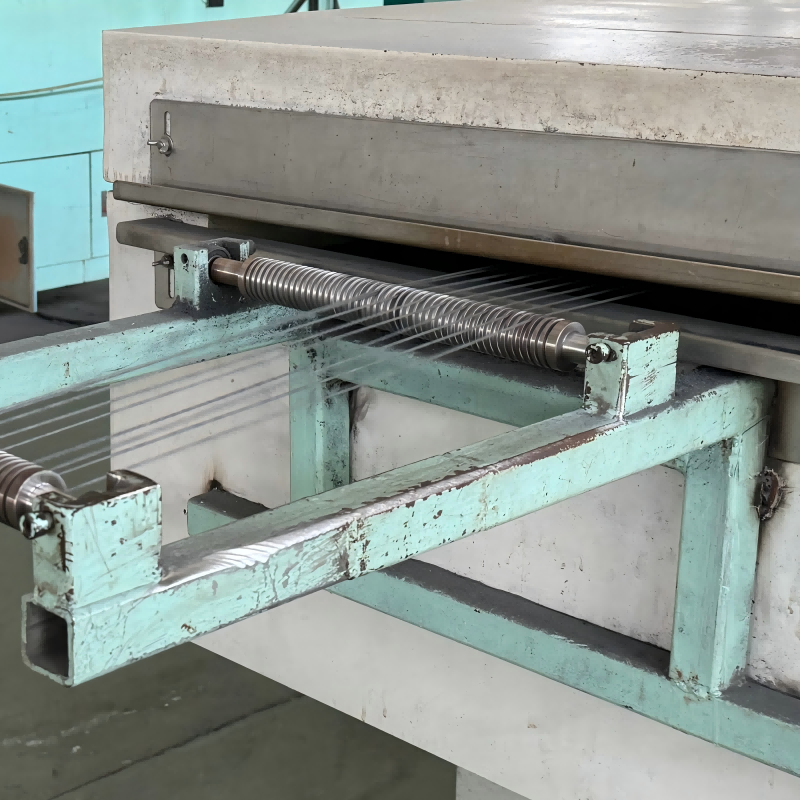
Achieving a consistent finish with abrasive filament.
One of the primary benefits is the ability to produce a highly consistent and repeatable surface finish. The combination of the filament's flexibility and self-sharpening action ensures that every part in a production run receives the same finishing treatment. This is critical in industries like aerospace and automotive, where precise edge radiusing and surface conditioning are required for performance and safety. By selecting the correct filament type and grit size, operators can achieve a predictable material removal rate and a specific Ra (surface roughness) value, ensuring high-quality outcomes from the first part to the last.
Long-lasting performance and durability of abrasive filament.
Abrasive filament brushes are engineered for durability. The nylon substrate provides excellent resistance to wear and chemicals, while the self-sharpening feature extends the useful life of the tool far beyond that of surface-coated abrasives. Unlike wire brushes, which can have filaments break off and pose a safety risk, high-quality nylon filaments are less prone to breakage and offer a safer operating experience. This longevity means less frequent tool changes, reduced machine downtime, and ultimately, increased productivity and cost-effectiveness in high-volume production environments.
Diverse Applications Where Abrasive Filament Shines
Thanks to its unique blend of flexibility and abrasive power, this material has found a home in a vast array of industries. From heavy metal fabrication to delicate electronics, abrasive filament provides solutions for complex finishing challenges.
Metalworking and Deburring with Abrasive Filament
In the world of metalworking, precision is paramount. Abrasive filaments are essential tools for achieving the final surface quality and dimensional accuracy required for high-performance components. They are widely used for everything from deburring and edge radiusing to surface finishing and cleaning.
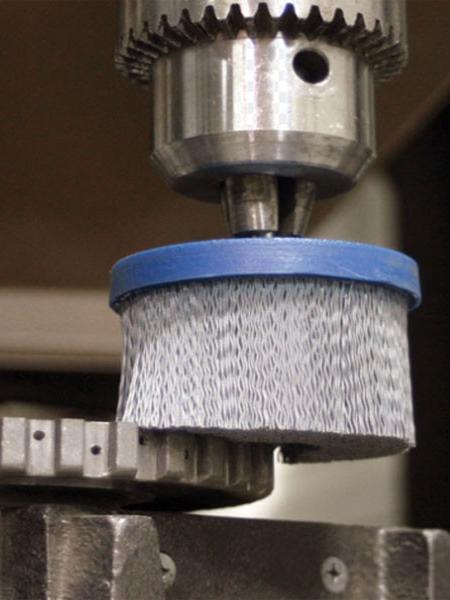
Removing sharp edges after machining using abrasive filament.
After processes like milling, drilling, or stamping, metal parts are often left with sharp, microscopic burrs and edges. These defects can impact part assembly, create stress points leading to premature failure, and pose a safety hazard. Abrasive filament brushes excel at removing these burrs. Their flexibility allows them to follow the contours of a part, including complex shapes like gear teeth or the entries of drilled holes, removing burrs without damaging the surrounding surface or altering the part's geometry. This is especially critical in the automotive and aerospace industries for finishing components like engine parts.
Surface preparation and cleaning with abrasive filament.
Abrasive filaments are also workhorses for general surface preparation and cleaning. They are highly effective at removing rust, scale, paint, and other contaminants from metal surfaces. This process is vital for preparing a surface for subsequent treatments like painting, powder coating, or welding, as it ensures proper adhesion. Brushes can condition the surface to create a specific "graining" or matte finish on primary metals like aluminum and steel, which is often desired for aesthetic reasons. Because they provide a controlled cutting action, they can clean surfaces thoroughly without the aggressive material removal associated with grinding or sandblasting.
The Role of Abrasive Filaments in Woodworking and Finishing
Just as in metalworking, abrasive filaments play a crucial role in achieving high-quality finishes on wood. Their gentle yet effective action is ideal for working with the natural grain and a variety of wood shapes.
Sanding and smoothing intricate wood pieces using abrasive filament.
For woodworkers dealing with intricate, contoured, or detailed pieces, traditional sanding methods can be cumbersome and ineffective. Abrasive filament brushes, often called sanding mops, are the perfect solution. They can easily sand and smooth complex profiles on moldings, raised panel doors, and furniture components. This is also a key application for finishing raw or reclaimed wood, preparing it for stains and sealers.
Creating unique textures with specialized abrasive filament brushes.
Beyond simple sanding, abrasive filaments can be used to create unique and desirable textures on wood surfaces. A technique known as "grain brushing" or "texturing" uses stiffer abrasive filaments to remove the softer springwood from the surface of the wood, leaving the harder summerwood raised. This process enhances the natural grain of the wood, creating a rustic, weathered, or three-dimensional effect that is popular in furniture and flooring design.
Other Unexpected Uses for Abrasive Filament
The utility of abrasive filament extends far beyond metal and wood into many specialized and high-tech fields.
From automotive to electronics: broad utility of abrasive filament.
The versatility of abrasive filament is evident in its wide range of applications across various industries:
- Automotive: Used for honing cylinder blocks, polishing engine components, and deburring a wide variety of machined parts.
- Electronics: Employed for cleaning and removing oxide layers on printed circuit boards (PCBs) to prepare them for soldering.
- Aerospace: Essential for precision deburring and edge finishing of critical components to ensure reliability and safety.
Selecting the Perfect Abrasive Filament for Your Needs
Choosing the right abrasive filament is crucial for achieving the desired outcome, whether it's aggressive material removal or fine polishing. The decision depends on several factors, primarily the grit size and the material composition of both the abrasive grain and the filament itself.
Understanding Grit Sizes in Abrasive Filament
Just like with sandpaper, the "grit size" of an abrasive filament refers to the size of the abrasive particles embedded within it. However, the numbering system can sometimes feel counterintuitive.
Fine, medium, and coarse: what each grit of abrasive filament means for your project.
Grit size is typically indicated by a number. A lower number indicates a larger, coarser particle, which results in more aggressive material removal and a rougher finish. Conversely, a higher number signifies a smaller, finer particle, used for lighter deburring, cleaning, and polishing to achieve a smooth finish.
- Coarse Grits (e.g., 24, 36, 60): These are used for heavy-duty tasks like aggressive deburring, removing significant burrs, and fast material removal.
- Medium Grits (e.g., 120, 180, 240): This is a versatile range suitable for general-purpose deburring, edge blending, and surface conditioning.
- Fine Grits (e.g., 320, 500, 600+): These are used for final finishing, light scuffing, cleaning delicate parts, and achieving a very smooth, polished surface.
Matching grit to material and desired finish with abrasive filament.
The selection process involves a careful balance between the task, material, and desired outcome. For removing heavy burrs on a hard material like steel, a coarse grit filament would be appropriate. For achieving a fine, decorative finish on a softer metal like aluminum or preparing wood for a sealer, a medium to fine grit would be the better choice. A practical approach is to start with a less aggressive grit and conduct a trial; if the process is too slow, you can move to a coarser grit. If the finish is too rough, switch to a finer one.
The following table provides a general guideline for matching grit size to application:
| Grit Size Range | Typical Applications | Resulting Finish |
|---|---|---|
| 24 - 80 | Heavy deburring, scale removal, aggressive cleaning | Coarse, high removal |
| 120 - 180 | General-purpose deburring, edge radiusing, surface blending | Medium, clean finish |
| 240 - 320 | Light deburring, surface conditioning, pre-paint scuffing | Fine, smooth surface |
| 500+ | Polishing, fine cleaning, achieving a decorative satin finish | Very fine, near-polish |
Note: This chart is a general guideline. Always consult manufacturer specifications for your specific material and application.
Different Filament Materials and Their Properties
Beyond grit size, the type of abrasive grain and the filament polymer are equally important. Each combination offers unique properties suited for different jobs.
Nylon, silicon carbide, aluminum oxide, and more in abrasive filament.
The filament is a composite of a polymer base and an abrasive grain. Here are some of the most common combinations:
- Silicon Carbide (SC): This is a very hard and sharp abrasive grain. It is more aggressive than aluminum oxide and is often used for finishing harder materials or when a high cutting rate is required. It provides a consistent, uniform finish.
- Aluminum Oxide (AO): This abrasive is known for its toughness and durability. It is less aggressive than silicon carbide and is preferred for finishing softer metals like aluminum or materials where a very smooth finish is desired.
- Ceramic Alumina (CeramiX®): This is a high-performance, engineered grain that can be exceptionally aggressive. It often features a self-sharpening characteristic where the grain micro-fractures during use, constantly exposing new sharp edges. This makes it ideal for demanding deburring applications with significantly longer life and higher throughput.
- Diamond: As the hardest known material, diamond abrasive filament is reserved for finishing extremely hard materials like ceramics, glass, and hardened tool steels.
- Nylon Base: Provides flexibility, chemical resistance, and durability. Different types of nylon (e.g., 6.12) offer varying levels of stiffness and moisture absorption, making them suitable for either wet or dry conditions.
When to choose a specific type of abrasive filament.
The choice depends on the material you are working with and your goal.
- Choose Silicon Carbide for fast cutting on cast iron, non-ferrous metals, and stone.
- Choose Aluminum Oxide for finishing softer, ductile metals like aluminum and steel, or when you need a smooth, refined surface.
- Choose Ceramic for high-production, aggressive deburring on tough metals where speed and longevity are critical.
- Choose Diamond for precision finishing of very hard, brittle materials.
Considering the filament diameter is also key. A larger diameter results in a stiffer, more aggressive brush action suitable for heavy work, while a smaller diameter provides more flexibility for finishing intricate details and delicate surfaces.
Frequently Asked Questions (FAQs)
Q1: What is the main difference between abrasive filament and a wire brush? The main difference lies in their action and safety. Wire brushes cut aggressively and can remove too much material or alter dimensions, while abrasive filaments offer a more controlled, flexible finishing action. Abrasive filaments are also self-sharpening and safer, as nylon bristles are less likely to break off and become dangerous projectiles than metal wires.
Q2: Can abrasive filament be used in wet conditions? Yes, many abrasive filaments are designed for wet applications. The key is to choose a filament with a low moisture absorption rate, such as Nylon 6.12, which retains its stiffness and performance when used with coolants or water.
Q3: How do I know when to replace an abrasive filament brush? An abrasive filament brush should be replaced when the filaments have worn down to the point where they are no longer effective or when the desired finish is no longer being achieved. Thanks to their self-sharpening nature, they typically have a long and predictable service life compared to other abrasives.
Q4: Is "abrasive filament" for brushes the same as "abrasive filament" for 3D printing? While they share a name, their applications are very different. Abrasive filament for brushes is used for subtractive processes like deburring and polishing. Abrasive filament for 3D printing is an additive manufacturing material containing particles (like carbon fiber) to create stronger, stiffer printed objects.
Conclusion
I hope this journey into the world of abrasive filament has shown you just how versatile and essential this material is for creating smooth, clean, and finished surfaces across countless industries. Its unique ability to combine the flexibility of a brush with the consistent, self-renewing power of an abrasive makes it an unparalleled tool for quality and efficiency.
From industrial deburring that ensures the safety and performance of critical components to perfecting a handmade craft with a flawless finish, understanding abrasive filament opens up a world of possibilities. I encourage you to consider its potential in your next project, whether you're a professional in a large-scale manufacturing plant or a dedicated creator in your own workshop. Explore the options, and you might just find the perfect solution for achieving superior results.

